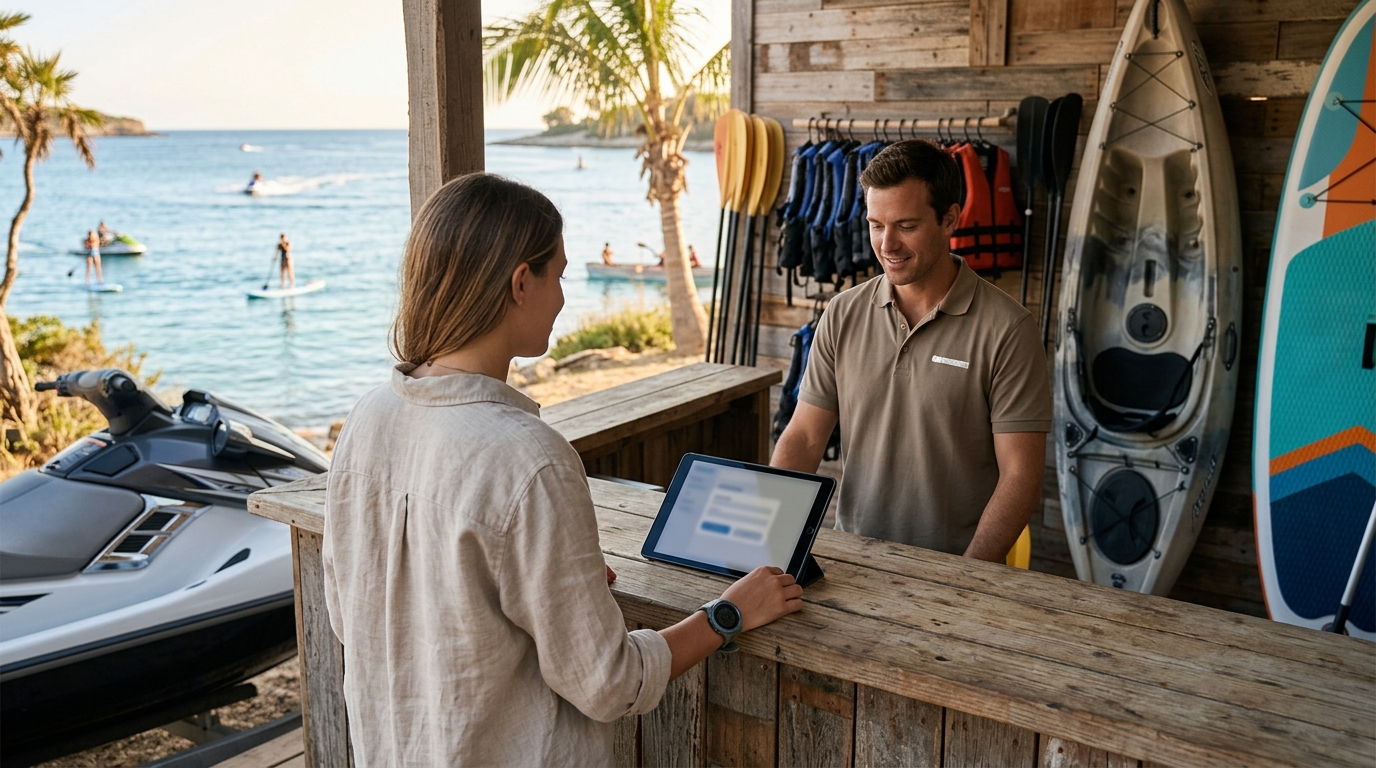
Renting a jet ski, kayak, or paddleboard should be the easy part of your day on the water. The hard part is knowing which provider actually deserves your trust—and your money. Whether you are booking a single-hour ride or planning a full-day group adventure, the rental company you choose directly affects your safety, your budget, and how much fun you actually have. This guide gives you a concrete, step-by-step process for evaluating any water sports rental service before you hand over your credit card.
Step 1 – Research Reputation Before You Visit
Your first move should happen long before you arrive at the dock. Online reviews on Google, Yelp, and Trustpilot are your best initial filter. Look for businesses with positive reviews, well-maintained equipment, and knowledgeable staff who can provide safety instructions and guidance. A pattern of recent five-star reviews matters more than a high count of older ones—seasonal businesses sometimes decline over time.
What to look for in reviews
- Consistent praise for equipment condition – Multiple reviewers mentioning clean, new, or well-kept gear is a strong signal.
- Staff mentions by name – Personal shoutouts usually indicate genuinely helpful service.
- Response to negative reviews – A provider that professionally addresses complaints demonstrates accountability.
- Photos from customers – Real images of equipment tell you more than stock photography on a website.
Popular boating destinations can get busy, especially during peak season, so it pays to research and book in advance to lock in the craft and time slot you want.
Step 2 – Inspect Equipment Condition On-Site
Reviews only go so far. Once you arrive, a quick physical inspection separates reliable operators from risky ones. The performance of any watercraft is significantly influenced by its condition, so never skip this step.
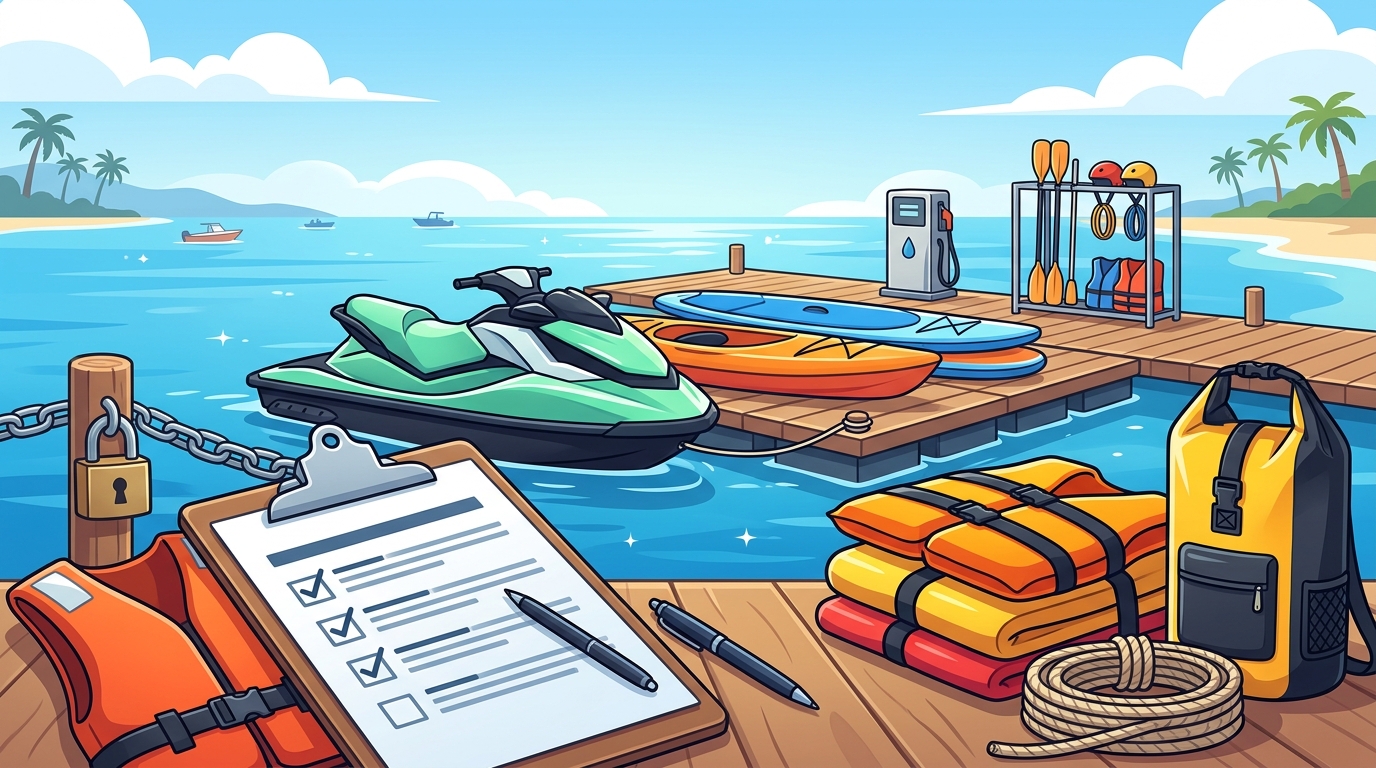
A 60-second equipment check
- Hull and body – Look for deep scratches, cracks, or sun-bleached plastic that suggests aging gear.
- Engine sound (motorized craft) – Ask the operator to start the jet ski or boat. Listen for sputtering, knocking, or excessive smoke.
- Steering and throttle – Confirm smooth response with no sticking or delay.
- Inflation and rigidity (SUPs and inflatables) – Press firmly on the deck; a quality inflatable board should feel rock-solid.
- Straps, buckles, and leashes – Check that leash cuffs are not cracked and buckles snap securely. Replace if cracked or worn.
Reliable rental shops provide a wide range of equipment, from entry-level boards to performance models, making it easy to swap if something does not feel right. Do not hesitate to ask for a different unit.
Step 3 – Evaluate Safety Protocols and Gear
Safety is non-negotiable. A reputable rental will equip you with essential safety gear, including life jackets, leashes, and possibly helmets, depending on the paddling or riding environment. If the provider does not proactively hand you a properly fitted life jacket before you touch the water, that is an immediate red flag.
Safety gear checklist
| Item | When Required | What to Check |
|---|---|---|
| U.S. Coast Guard–approved life jacket | Always | Correct size, no ripped fabric, all buckles functional |
| Helmet | Wakeboarding, water skiing, whitewater kayaking | Snug fit, intact foam liner, secure chin strap |
| Whistle or signaling device | All motorized and paddle craft | Attached to PFD, loud and operational |
| Leash | Paddleboarding, surfing | No fraying, secure Velcro or buckle cuff |
| Kill switch lanyard | Jet skis, motorboats | Clip attaches firmly; cord is not stretched or damaged |
The U.S. Coast Guard estimates that wearing a life jacket would save the lives of more than 450 people a year. Never accept a provider who treats PFDs as optional or lets you ride without one.
Safety briefing expectations
A trustworthy operator will deliver a clear pre-ride safety briefing. Most rental companies will provide a brief safety orientation before you head out, but the quality of that briefing matters. It should cover at minimum:
- How to start, stop, and steer the craft
- Designated riding or paddling areas and boundaries
- Local speed limits and no-wake zones
- Emergency shut-off procedures
- Hand signals for communication on the water
Step 4 – Understand Pricing, Policies, and Hidden Costs
Affordability and value are crucial factors when selecting a rental. Evaluate the rental rates, looking for packages that suit your timeline and budget. But price alone is misleading—what matters is total cost once you factor in deposits, fuel surcharges, damage waivers, and overtime fees.
Questions to ask before paying
- Is fuel included, or will I be charged at return?
- What is the damage deposit, and under what conditions is it refunded?
- Are there late-return penalties, and how are they calculated?
- Does the quoted rate include safety gear, or is that an add-on?
- Do you offer multi-hour or group discounts?
Understanding the service's insurance and damage policies can save you from unexpected expenses, ensuring peace of mind during your adventure. Ask to see the rental agreement in advance—ideally before your trip—so there are no surprises at the counter.
Rental costs vary based on equipment type and duration. Typical hourly rates range from around twenty dollars for a basic kayak to one hundred fifty dollars or more for a jet ski, though location and season shift these numbers significantly.
Step 5 – Assess Staff Knowledge and Customer Service
The people behind the counter reveal a lot about the company. Experienced providers maintain their gear to the highest standards, offer clear instructions, and have trained staff ready to assist with every detail. If the staff cannot answer basic questions about tide conditions, local regulations, or equipment specs, the operation likely lacks depth in other areas too.
Simple test questions to ask staff
- What is the current tide schedule, and how will it affect my ride?
- Which area do you recommend for my experience level?
- What should I do if the engine dies or I capsize?
- How recently was this equipment serviced?
Knowledgeable staff will answer confidently and may even volunteer extra tips about local conditions. A provider that tailors each rental or adventure based on the size of your group, your experience level, and the type of fun you are aiming for is one that genuinely cares about your experience.
Step 6 – Verify Insurance, Waivers, and Local Compliance
Every legitimate rental operation should carry liability insurance and require you to sign a waiver. The Water Sports Industry Association (WSIA) provides standardized forms including a Release of Liability, Rental Agreement, and related documents that many reputable operators use. If a company cannot produce proof of insurance or asks you to sign nothing at all, walk away.
Local regulations vary
Water sports activities are governed by specific laws and regulations that may vary from place to place. Some states require renters to complete a boater safety course before operating a jet ski or motorboat. In Minnesota, for example, the rental course is for those 18 years or older who want to rent and operate a boat or personal watercraft from a rental business, and certification is valid for 180 days. A reliable provider will inform you of these requirements during booking—not when you show up.
All WSIA members are required to operate according to ASTM standards, which is another marker of a professional operation. Ask if the business holds any industry memberships or certifications.
Step 7 – Look for Value-Added Services
The best rental companies do more than hand you a piece of equipment. Consider rental services that go beyond just providing equipment—additional offerings such as guided tours, lessons, and extra amenities like storage or transportation services can significantly enrich your experience.
Value-adds worth paying for
- Guided tours – Ideal for unfamiliar waters; local guides offer insight into notable coastal routes while addressing safety and environmental conditions.
- Lessons for beginners – Even a 15-minute primer dramatically improves confidence and safety.
- Delivery to your location – Some operators bring gear to your beach, dock, or vacation rental.
- Photo or GoPro packages – Capture the experience without risking your own devices.
- Multi-sport bundles – Try kayaking in the morning and jet skiing in the afternoon at a discounted combined rate.
A rental service situated close to the water means less time transporting equipment and more time enjoying the experience. Proximity to a good launch point is itself a valuable feature.
Red Flags That Should Make You Walk Away
- No life jackets offered or visible on-site
- Visibly damaged equipment with no alternatives available
- No safety briefing whatsoever
- Refusal to show insurance or licensing documents
- Cash-only with no receipt – often indicates an unlicensed operation
- Pressure tactics – a legitimate business does not rush you past safety steps
- No signed rental agreement or waiver
Poorly maintained equipment or lack of support can quickly turn a fun outing into a frustrating or even dangerous experience. Trust your instincts—if something feels off, find another provider.
Key Takeaways
- Start online. Check reviews across multiple platforms and look for patterns, not just star ratings.
- Inspect in person. A 60-second equipment check can prevent a day-ruining breakdown.
- Demand proper safety gear. Coast Guard–approved PFDs, kill switches, and whistles are the minimum.
- Read the rental agreement. Know the deposit, damage, fuel, and overtime policies before you sign.
- Test the staff. Knowledgeable employees indicate a well-run operation from top to bottom.
- Confirm legal compliance. Insurance, waivers, and any required boater education should be handled proactively by the provider.
- Seek extras that matter. Guided tours, lessons, and multi-sport bundles elevate a good rental into a great experience.
Frequently Asked Questions
How much does it typically cost to rent water sports equipment?
Prices vary widely by location and equipment type. Expect to pay roughly twenty to fifty dollars per hour for kayaks and paddleboards, and seventy-five to one hundred fifty dollars per hour for jet skis. Group and multi-hour discounts are common, so always ask.
Do I need a license or certification to rent a jet ski?
Requirements differ by state. Some states mandate a boater safety course before you can operate a personal watercraft. A reliable rental company will notify you of local requirements at the time of booking so you can complete any courses in advance.
What safety equipment should a rental company provide?
At a minimum, the company should supply a properly fitted, Coast Guard–approved life jacket for every rider. Depending on the activity, helmets, leashes, whistles, and kill-switch lanyards should also be included. If any of these items are missing or damaged, request replacements or choose a different provider.
How can I tell if rental equipment is well-maintained?
Look for clean hulls free of deep cracks, engines that start smoothly without excessive smoke, and safety gear with intact straps and buckles. Reputable operators keep a detailed log of performance and maintenance for each piece of equipment and are usually happy to share service dates when asked.
Is rental insurance worth it?
Optional damage waivers offered by rental companies can save you from large out-of-pocket costs if equipment is damaged during normal use. Review what your personal travel or homeowner's insurance already covers, then decide whether the add-on policy fills a meaningful gap.
Should I book water sports rentals in advance?
Yes, especially during peak season. Booking ahead ensures you get the specific equipment and time slot you want and often unlocks early-bird or online-only discounts.
Final Thoughts
Finding a reliable water sports rental service comes down to doing a little homework before your trip and staying observant once you arrive. The seven steps above give you a repeatable framework you can use anywhere—from a Gulf Coast beach town to a mountain lake resort. Choosing the right provider protects your time, your investment, and your safety, giving you the freedom to focus on making unforgettable memories out on the water.
At Salty's Water Sports, we take every item on this checklist seriously—from Coast Guard–approved safety gear to transparent pricing and knowledgeable guides who know local waters inside and out. Ready to see the difference a reliable rental makes? Browse our rental options and book your next adventure today.